
 by Emmitt Barry, Worthy News Washington D.C. Bureau Chief
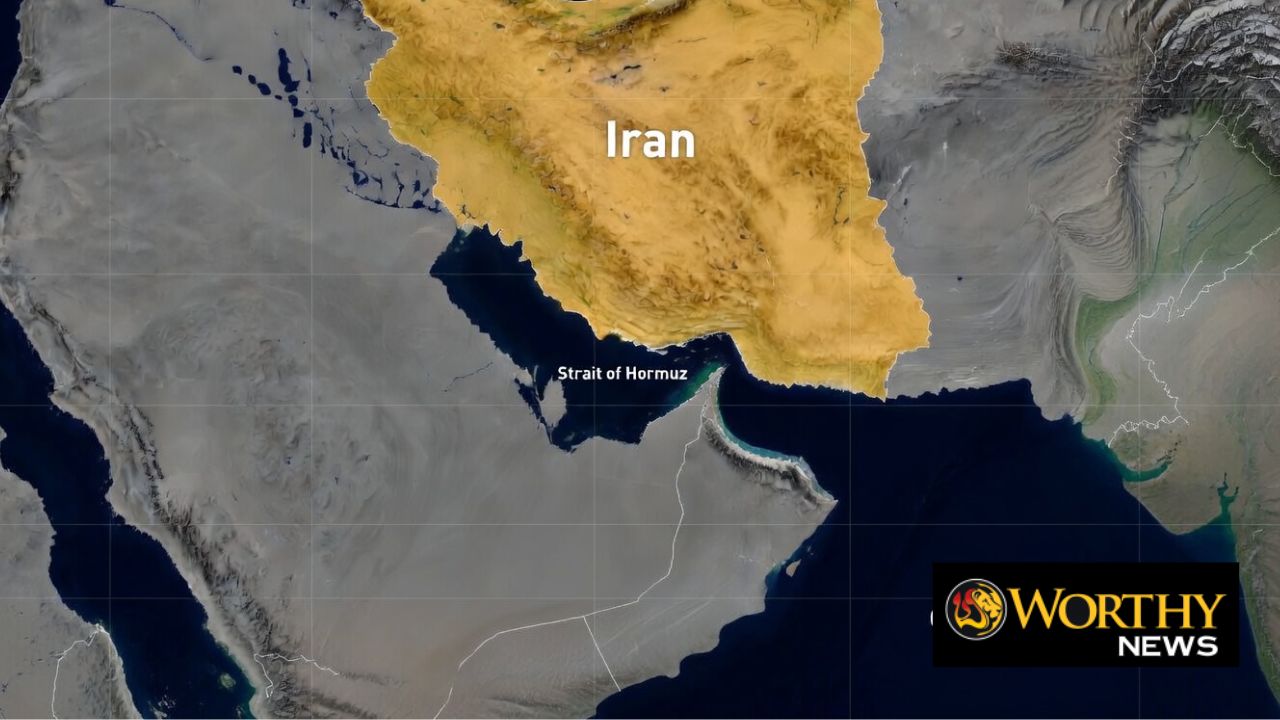
(Worthy News) – The United States is turning to an unusual but highly effective combination of cutting-edge technology and trained marine mammals as it works to clear dangerous naval mines from the Strait of Hormuz and restore the flow of global shipping.
Following Iran’s renewed closure of the strategic waterway and warnings of mine threats, the U.S. Navy has launched an intensive mine-countermeasure operation centered on unmanned sea drones and its long-running dolphin program—two tools designed to locate explosives without placing sailors directly in harm’s way.
According to reporting from The Wall Street Journal, these systems are now at the forefront of America’s efforts to reopen one of the world’s most critical oil transit routes.
Sea Drones Lead the Charge
At the heart of the operation are advanced unmanned systems capable of scanning the ocean floor with precision sonar.
The U.S. Navy is deploying the Common Uncrewed Surface Vessel built by RTX Corporation, which tows AQS-20 sonar arrays to map wide stretches of seabed in search of hidden mines.
Below the surface, robotic submarines such as the MK18 Mod 2 Kingfish and Knifefish—developed by General Dynamics—are conducting detailed sweeps, navigating pre-programmed routes to identify threats.
Once mines are detected, a second wave of drones can be dispatched to neutralize them, either by controlled detonation or remote triggering. Military experts say these autonomous systems dramatically reduce risk while accelerating the timeline for reopening shipping lanes.
Dolphins Join the Mission
Alongside these high-tech tools, the Navy is also utilizing one of its most unique assets: trained dolphins.
For decades, the U.S. military has maintained a marine mammal program in which dolphins are trained to detect underwater mines and mark their locations. With their natural sonar abilities—far more sensitive than most man-made systems—dolphins can identify objects buried in sediment or hidden in complex underwater terrain.
In the confined and high-risk waters of the Strait of Hormuz, these animals provide a level of precision that complements the broader scanning capabilities of drones.
Their role is not to neutralize explosives, but to locate and signal their positions so that robotic systems or divers can safely eliminate the threat.
A Hybrid Approach to a Growing Threat
The combination of drones and dolphins reflects a hybrid strategy—pairing advanced robotics with biological detection—to address one of naval warfare’s oldest dangers.
Iran’s actions have already disrupted maritime traffic, forcing vessels into narrow alternative routes and raising fears of further escalation. While President Donald Trump has suggested progress is being made in removing mines, shipping experts warn the threat remains active.
Even if initial channels are cleared quickly, restoring normal traffic through the strait could take weeks or longer, as each route must be carefully inspected and secured.

19
people are currently praying.
💡 Did you know? One of the best ways you can support
Worthy News is by simply
leaving a comment and sharing this article.
📢 Social media algorithms push content further when there’s more engagement —
so every 👍 like, 💬 comment, and 🔄 share helps more people discover the truth. 🙌
Latest Worthy News
If you are interested in articles produced by Worthy News, please check out our FREE sydication service available to churches or online Christian ministries. To find out more, visit Worthy Plugins.
Get signed up on our Free Newsletter Today!
