
Jan Bartek – AncientPages.com – For many years, historians have believed that as small villages grew into cities, inequality increased. Usually, a few leaders, such as kings and priests, would take control of wealth, causing the gap between rich and poor to widen.
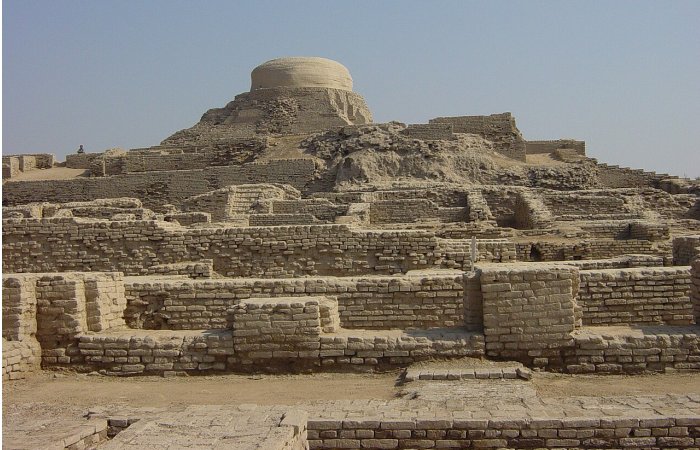
However, a new University of York study examining the 4,000-year-old Mohenjo-daro, the largest city of the Indus civilization, reveals the opposite. By analyzing house sizes, researchers found Mohenjo-daro was more equal than cities in Mesopotamia and Greece, and became increasingly egalitarian over time.
Ancient ruins of Mohenjo-Daro. Credit: Wikipedia – CC BY-SA 3.0
People In The Indus Valley Had A Different Approach
“Legacy data from the ancient city shows that as the city matured, the gap between the largest and smallest homes narrowed. In fact by its later years, the wealth gap in this massive urban centre had dropped to levels typical of the first farming villages,” the lead author, Dr Adam Green from the University of York’s Department of Archaeology and Department of Environment and Geography, said.
“While ancient Egyptians were building pyramids for god-kings, and the Greeks were constructing massive palaces at Knossos, the people of the Indus were building something entirely different.
“Instead of gold-filled tombs and huge temples, Mohenjo-daro focused on sophisticated brick-lined drains and organized street layouts. Instead of allowing the perks of society to accumulate with a tiny elite, the city’s amenities were widely distributed amongst the everyday households.”
What Can The Famous Seals Reveal?
This was particularly true with regard to the distribution of the famous Indus seals, which were tools of business and trade. Indus seals were typically found in ordinary homes and not in public buildings, with no palaces to monopolize these tools of government.
It was evident that rather than a single ruler hoarding resources, the city’s inhabitants worked together to ensure fair access to a good standard of living.
Investment in practical things, like drainage and street maintenance, was also a sign of collective work for the public good. The use of a standardized system of weights and measures across the region ensured that exchange remained fair for all citizens.
Rising Productivity
The study challenges the modern assumption that rising inequality is an unavoidable side effect of economic growth. Mohenjo-daro, the researchers say, stands as proof that a society can be technologically advanced and highly productive whilst also ensuring its prosperity is shared by the many, rather than the few.
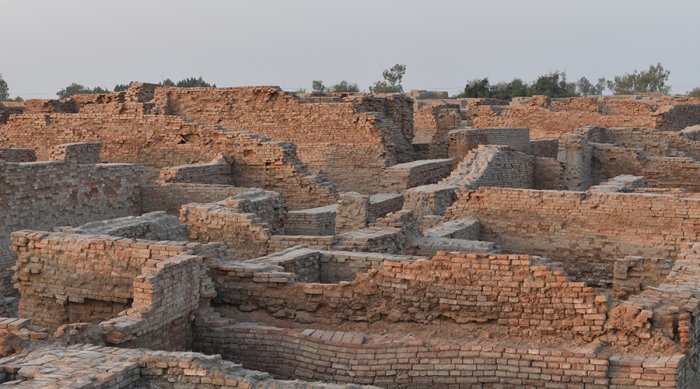
A view of DK-G South, facing north-west, from December 2023, highlighting the complexity of the standing architecture at Mohenjo-daro (photograph by Adam S. Green).
“Mohenjo-daro is often cited as being famous for what it doesn’t have, such as the absence of palaces for kings, gold-filled tombs, and no statues of rulers. But what it does have is so important.
See also: More Archaeology News
In the period when inequality appears to be lowest, productivity appears to rise. It challenges the idea that prosperity requires us to concentrate decision-making powers in the hands of the few.
It is quite an interesting lesson for modern societies, as the Indus civilization demonstrates clearly that an urban society can be highly productive and inventive at scale, whilst also ensuring that resources and power are shared equitably. In fact, doing so may even have been essential to sustaining prosperity over the centuries,” Dr. Green said.
The study was published in the journal Antiquity
Written by Jan Bartek – AncientPages.com Staff Writer
Get signed up on our Free Newsletter Today!
