
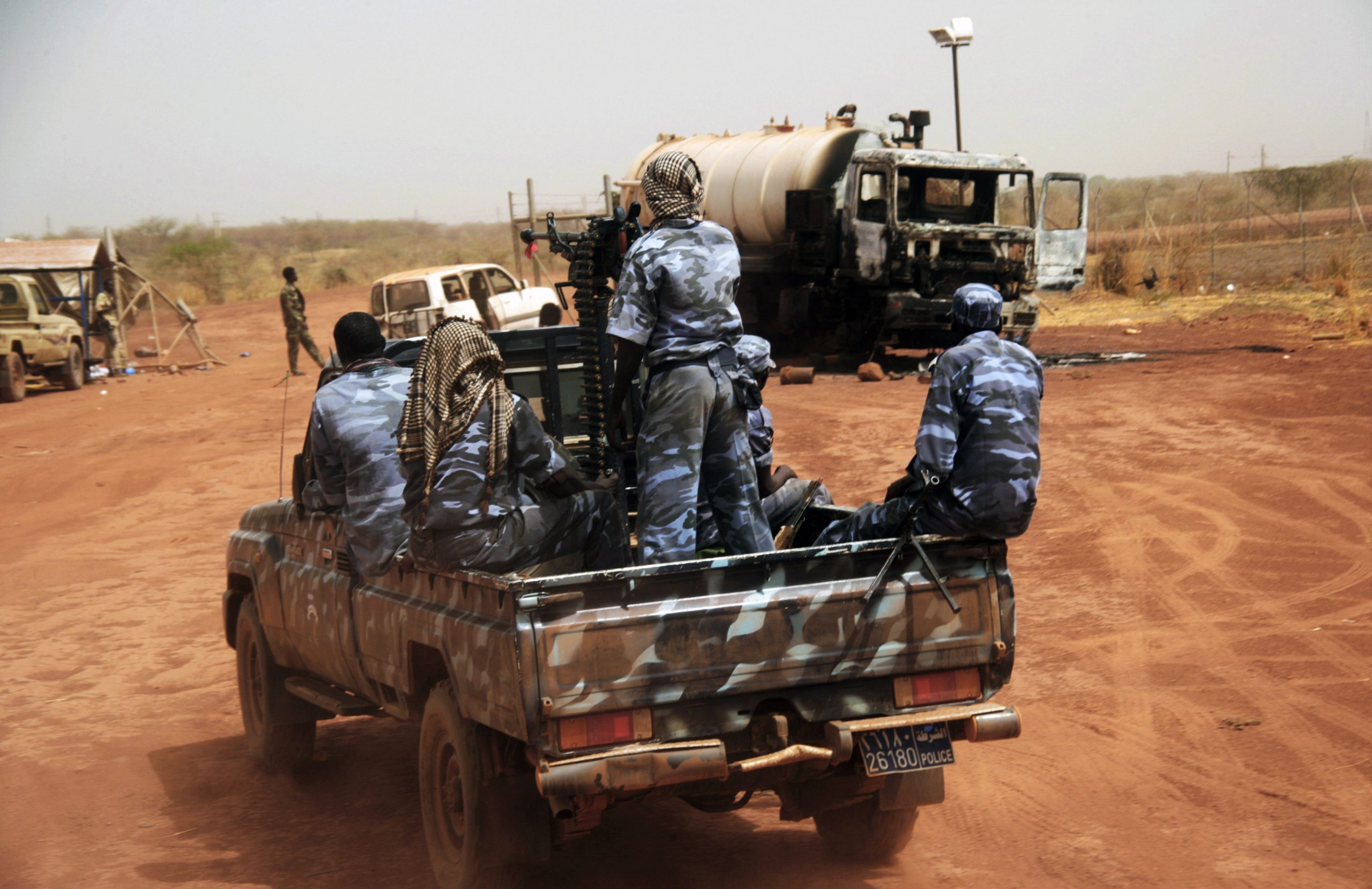
KHARTOUM, Sudan — After more than three years of bloodshed, Sudan remains fractured by violence, displacement, and severe famine. The civil war has forced millions to flee their homes. Cities lie in ruins. And accusations of genocide and war crimes continue to mount against the warring factions inside what aid organizations and the United Nations characterize as the world’s worst humanitarian crisis.
During a recent reporting trip to Sudan, CBN News obtained rare access to areas controlled by the Sudanese Armed Forces, offering a firsthand look at the devastation that spans the country.
Khartoum, once known for its bustling streets and one of Africa’s most recognizable skylines, now stands hollowed out by war. Burned-out buildings line nearly-deserted roads. Bullet holes scar homes, businesses and government offices. Entire neighborhoods appear abandoned.
The destruction reflects a complex power struggle involving political, ethnic, religious, and international interests.
“You have an amalgam — a very complex amalgam — of different groups,” said Ralf Krüger, former Africa bureau chief for DPA. “You have mercenaries. You have the Russians, the former Wagner Group. They are in the country because of the gold mines.”
Sudan’s current conflict traces back to the late 2018 and 2019 anti-government protests over the economy under the 30 year rule of Omar al-Bashir. Hopes for democracy were shattered in April 2023 when tensions between military factions erupted into civil war in the capital city.
Today, Sudan is effectively divided. The Sudanese Armed Forces control much of the east, while the paramilitary Rapid Support Forces, known as the RSF, have established influence and a parallel government across large swaths of the western region.
The fighting has drawn in foreign interests from countries providing economic, political and, in some cases, military support. That includes Saudi Arabia, Iran, Russia, China, Turkey, Colombia, United Arab Emirates and some of Sudan’s neighbors in East Africa.
International organizations accuse both sides of committing war crimes. The United States and the United Nations have gone further, accusing the RSF of genocide against civilians.
“We cannot compare a national institution with a militia,” said Sulaima Ishaq al-Khalifa of Sudan’s Ministry of Human Resources and Social Welfare, defending the government forces. “The crimes against civilians are more intensive, and they are recording that. They [RSF] record their crimes and are very proud of what they have been doing.”
According to humanitarian agencies, millions of Sudanese have fled to border countries including South Sudan, Egypt, Libya and Chad. However, the vast majority remain displaced within Sudan itself, living in overcrowded camps with limited food, sanitation, and medical care.
During a visit to one displacement camp in Al Dabbah in northern Sudan, roughly five hours from Khartoum, a mother named Entssar Abdalla Ahmed invited CBN News into the one-room tent she now shares with her two children. Originally from El Fasher in western Sudan, she fled after an RSF massacre at the Zamzam displacement camp.
“I walked nearly 500 miles,” she said through an Arabic interpreter who translated her responses to English. “This is a very, very sad crisis for Sudanese women,” the interpreter added.
Ahmed broke down while recounting her escape.
“They stole her phone and her money,” the interpreter explained. “They cut her clothes and left her naked.”
Her testimony mirrors findings documented in a United Nations report, published in February, detailing allegations of torture, forced starvation, executions, and widespread sexual violence committed during the conflict. Investigators say women and children — including victims as young as one year old — have been subjected to sexual abuse.
Conditions inside the camps remain dire. Residents often receive only one meal a day for six days each week. The camp in Al Dabbah has 200 bathrooms to serve roughly 25,000 people. Of the 9,500 children who live in the camp, there’s only enough school desks for 450 kids to attend school.
Before the war, Sudan already faced a major displacement crisis, with an estimated five million people forced from their homes. That number has now more than doubled to approximately 12 to 14 million — many of them children whose lives have been entirely spent within displacement camps.
While in Sudan, CBN News met with aid groups, activists, and top government leaders, including Sudan’s military-appointed prime minister, Kamil Idris. He insisted the Sudanese Armed Forces had “won” the war despite ongoing fighting.
“We can say with total confidence that we have won this war,” Idris said while declaring 2026 will be a year of peace,
“I am here to help my people, to support this great nation and establish durable peace and security,” he added.
During the trip, organized by the One Campaign, CBN News and other foreign journalists traveled only within SAF-controlled territory. Government officials attempted to closely manage itineraries and interviews in an effort to project legitmacy and to help shape international perceptions of the conflict.
Even as some residents slowly return to Khartoum, daily life remains unstable due to frequent power outages, water shortages, and unexploded land mines scattered throughout the city.
Others who stayed behind to support their communities have reconsidered their next steps.
“I was even planning to leave when the war stops,” said artist and activist Duaa Tariq, who runs Emergency Reponse Rooms. “Now I’m here because I believe being with the people gives me hope. Hundreds of people around me are actively trying every day.”
Aid workers warn that Sudan’s crisis remains largely obscured because global attention is directed toward conflicts elsewhere.
“Fifty million people are here. Twenty-five million are in humanitarian need,” said Elizabeth Hoffman of the One Campaign. “But because of everything else going on in the world — Iran, Ukraine, Gaza, and politics in the United States — Sudan often falls below the headlines. It feels like a forgotten crisis.”
For displaced families like Ahmed’s, the hope remains painfully simple: safety, peace, and a return home.
“Our message to the world,” Ahmed said through her interpreter, “is that we need to be safe. We need peace. We need to go back home.”
The ONE Campaign organized and funded the trip to Sudan to raise public awareness of the humanitarian crisis as a result of the ongoing civil war.
Get signed up on our Free Newsletter Today!
