
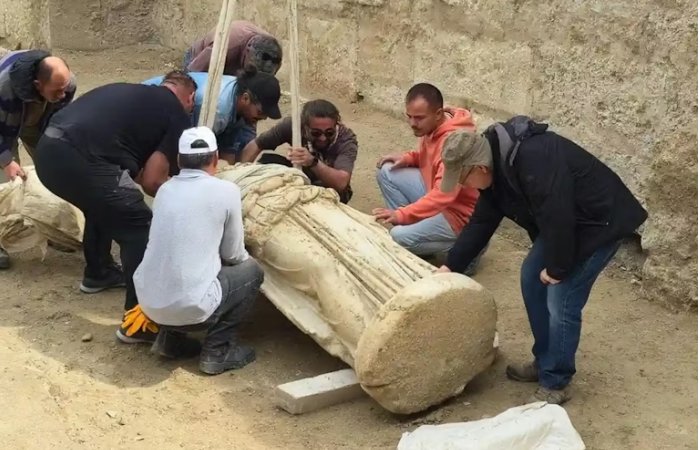
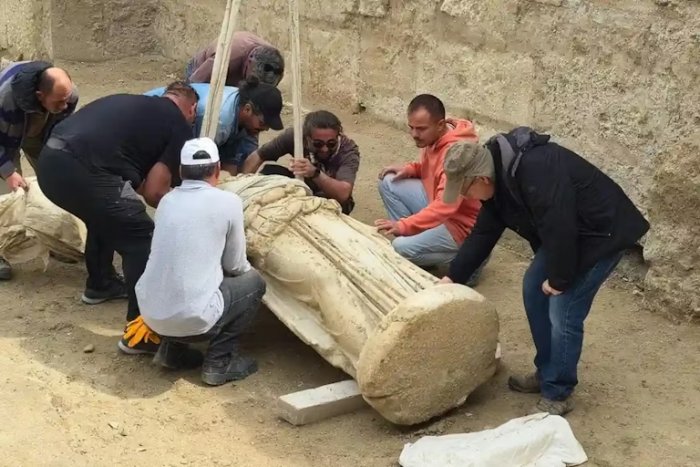
Conny Waters – AncientPages.com – A remarkable discovery has been made in the ancient city of Laodicea in southwestern Türkiye, where a two-meter-tall white marble statue of the goddess Athena has been uncovered in the stage area of the Western Theatre.
Found lying face down in a pile of rubble, the statue is missing its head, yet the rest of the figure is impressively well preserved, offering scholars a valuable window into the artistic and religious life of the Roman era.
Credit: Türkiye’s Minister of Culture and Tourism
Archaeologists explain that this Athena statue once formed part of the theater’s grand decorative program, where columns were adorned with sculptures of Roman gods, rulers, and mythological scenes. Its refined classical style, characteristic of the Augustan period, and its high artistic quality highlight the care and creativity invested in this cultural space. The find underscores once again how this theater, which served as a setting for performances of Homer’s epics, also functioned as a vibrant center of cultural expression.
Ongoing excavation and restoration work at Laodicea—one of Denizli’s most treasured cultural heritage sites—continues to bring the artistic and cultural legacy of the ancient world into the present. In particular, research in the Western Theatre’s stage building is yielding significant discoveries that enrich archaeological knowledge and deepen our appreciation of ancient storytelling traditions.
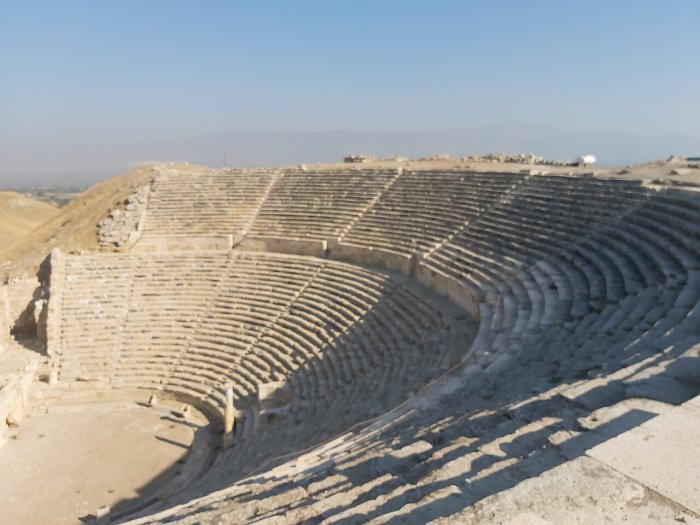
Built several centuries before our era and later expanded, the theater hosted not only dramatic performances but also mythological narratives, including episodes from the Iliad and the Odyssey. Previous excavations have revealed sculptural motifs from Odysseus’ journey, such as his encounter with the Cyclops Polyphemus and the sea monster Scylla. The venue was richly decorated with sculptures inspired by Homeric epics, turning the space into a visual celebration of these timeless tales.
Credit: Türkiye’s Minister of Culture and Tourism
Dating back to the 2nd century BC, the Western Theatre’s stage building features an impressive three-story architectural design, with 16 columns on each level. Between these columns once stood statues of gods, goddesses, rulers, and scenes from Homer’s works. Sculptural groups depicting places like the Land of the Laestrygonians, the cave of the giant Polyphemus, and the fearsome Scylla show that the structure was more than a performance venue—it was a powerful medium for transmitting cultural narratives across generations.
Laodicea on the Lycus, Western Theatre. Credit: Basak – CC0
Numerous sculptures related to these stories, unearthed during the 2024–2025 excavations, invite deep admiration and gratitude for the enduring richness of the ancient world and for the dedicated efforts of those who continue to uncover and preserve it.
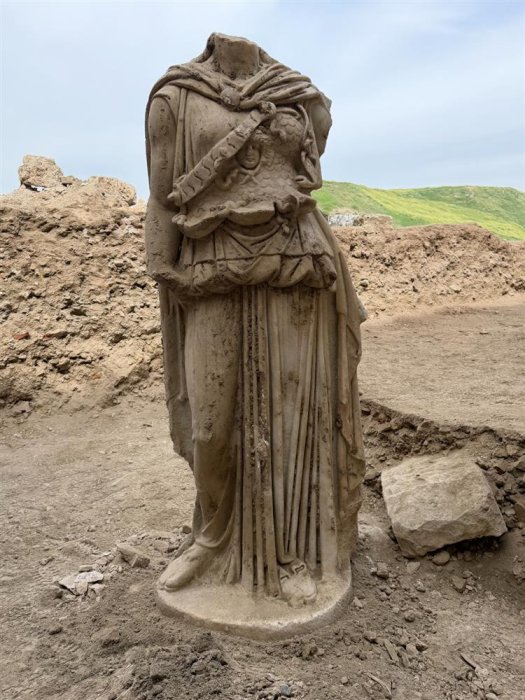
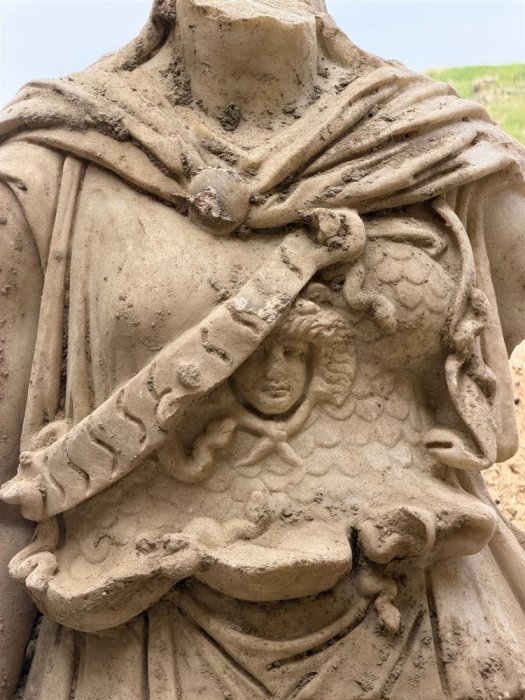
The statue of Athena, shown standing on a round pedestal, is rendered with remarkable care and artistry. Her finely woven, sleeveless peplos, the chlamys draped around her neck, and the aegis on her chest—adorned with a Medusa head and snakes—together highlight the sculptor’s deep attention to detail and symbolism.
Credit: Türkiye’s Minister of Culture and Tourism
The elegant folds of her garment and the lifelike texture of the fabric speak to an impressively high artistic quality. The distinctive feature of the cape around her neck further elevates the importance and uniqueness of this work. Even though the back of the statue was left rough, likely because it stood between columns and was not fully visible, it is still recognized as the creation of a highly skilled sculptor. It is a true work of ancient art!
See also: More Archaeology News
Artistically and stylistically, the statue is appreciated as a fine reflection of the early classical style of the Augustan period (27 BC–14 AD). Its presence in Laodicea—an important weaving center in antiquity—adds even more meaning. Here, Athena was especially honored as a weaver rather than primarily as a warrior, and festivals were devoted to her, as confirmed by inscriptions. This connection between the city’s heritage and the goddess’s identity makes the statue all the more significant.
The restoration work in the Western Theatre stage building is planned to continue without interruption from the beginning of 2026, ensuring that this cultural and artistic legacy will be preserved and appreciated for years to come.
Source: Ministry of Culture and Tourism of the Republic of Turkey
Written by Conny Waters – AncientPages.com Staff Writer
Get signed up on our Free Newsletter Today!
