
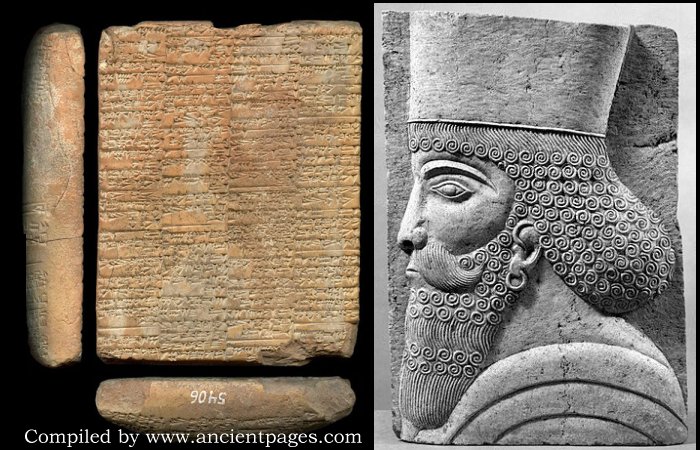
Conny Waters – AncientPages.com – For more than a century, the National Museum in Denmark has had the privilege of safeguarding a remarkable collection of inscribed tablets from the earliest civilizations of the Middle East—many of which are over 4,000 years old and written in languages that no longer exist.
Long kept in quiet preservation, these tablets are now revealing their secrets, thanks to researchers who have deciphered them and uncovered captivating texts about magic, kings, and even the everyday workings of ancient bureaucracy.
Around 5,200 years ago, people in what is now Iraq and Syria began carefully carving characters into clay tablets. This groundbreaking way of recording information made it possible to build advanced urban societies with sophisticated administrative systems—an extraordinary achievement in human history.
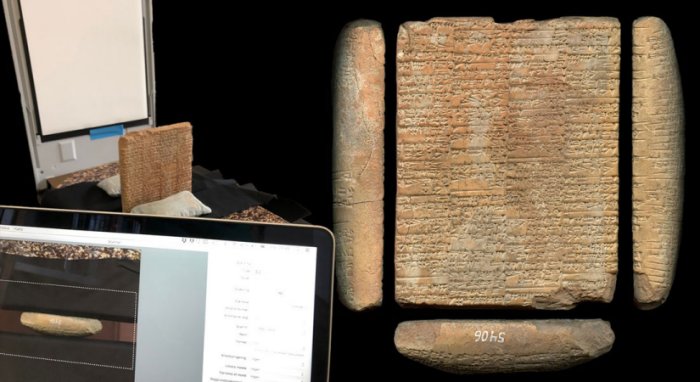
This is what happens when a 5,000-year-old technology meets the digital age. Researchers from the National Museum of Denmark and the University of Copenhagen have analysed, identified and digitised a large collection of cuneiform tablets. Photo: Troels Pank Arbøll
Over the past 100 years, the National Museum has thoughtfully assembled a substantial collection of these early written sources, all in cuneiform and in long-extinct languages. Although the collection had remained largely unstudied in recent times, it is now receiving the attention it deserves.
Researchers from the museum and the University of Copenhagen have, for the first time, analyzed, identified, and digitized all of these ancient texts as part of the project “Hidden Treasures: The National Museum’s Cuneiform Collection.” Their work is a deeply appreciated contribution to preserving and sharing our shared human past.
As the researchers began to explore the collection in greater depth, they discovered a remarkable world hidden in plain sight: a rich tapestry of texts, from everyday accounts and personal letters to medical remedies and powerful magical incantations.
Among these treasures is a small group of texts from the ancient Syrian city of Hama, once carefully studied by a Danish expedition in the 1930s. Hama’s story is one of both devastation and endurance. In 720 BC, the city was destroyed and plundered by Assyrian warriors, who carried their spoils back to their capital, Assur, in what is now Iraq. Yet in their haste, they left behind some of the clay tablets—fragments of knowledge and memory that refused to be erased.
“The texts in the collection that originate from Hama are almost 3,000 years old and deal with medical treatments and magical incantations. They had been left behind in the remains of what we believe must have been a large temple library. All other texts were gone,” explains Assyriologist Troels Pank Arbøll, who has been part of the Hidden Treasures project.
According to him, the Hama texts are entirely unique, as virtually no other cuneiform texts on these subjects have been found from the same region during this period. And one text in particular caught his attention:
“One of the clay tablets turned out to contain a so-called anti-witchcraft ritual, which was of enormous importance to the royal authority in Assyria because it had the remarkable ability to ward off misfortunes—such as political instability—that might befall a king,” says Pank Arbøll.
The ritual described was an all-night ceremony in which an exorcist burned small wax and clay figurines while reciting a set series of incantations. This type of ritual played a central role in Assyrian religious practice, which makes its appearance in Hama—far from the Assyrian capital and the major literary centers of Babylonia—particularly noteworthy to researchers.
Within the same collection, scholars also identified a copy of a well-known regnal list, a document that records both mythical and historical kings. This list is politically significant, as it traces royal lineages back to a time before Noah and the Flood. The tablet found in the National Museum is a school exercise tablet and refers to kings who ruled at the end of the 3rd millennium BC. Other versions of the list include the legendary King Gilgamesh, familiar from the Epic of Gilgamesh.
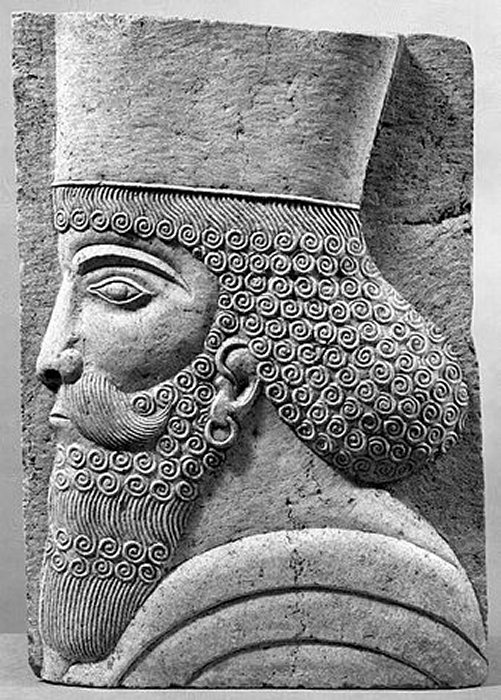
Gilgamesh stone carving. Credit: Hod246 – CC BY-SA 4.0
“That makes this regnal list one of the few relics we have that suggests Gilgamesh may have actually existed. We had no idea we had a copy of that list here in Denmark. It is quite spectacular,” says Pank Arbøll.
Another remarkable group of texts in this collection comes from the Danish excavations at Tell Shemshara in 1957, in what is now northern Iraq. These ancient writings—letters between a local chieftain and an Assyrian king from around 1800 BC, along with a series of administrative documents—remind us how deeply rooted our need to communicate, organize, and record our lives truly is.
See also: More Archaeology News
It was precisely documents like these, created to manage the complexities of early societies, that played a vital role in the very invention of cuneiform.
“A great many of the cuneiform tablets we have today bear witness to a highly developed bureaucracy. There was a need to keep track of the advanced societies that were being built, and we have found a large number of cuneiform tablets containing practical information, such as accounts and lists of goods and personnel. It is therefore not surprising that one of the tablets in the National Museum’s collection contains something as commonplace as a very old receipt for beer,” concludes Pank Arbøll.
Source: University of Copenhagen
Get signed up on our Free Newsletter Today!
